
lizzie stables On , ambition, motherhood and making meaningful work
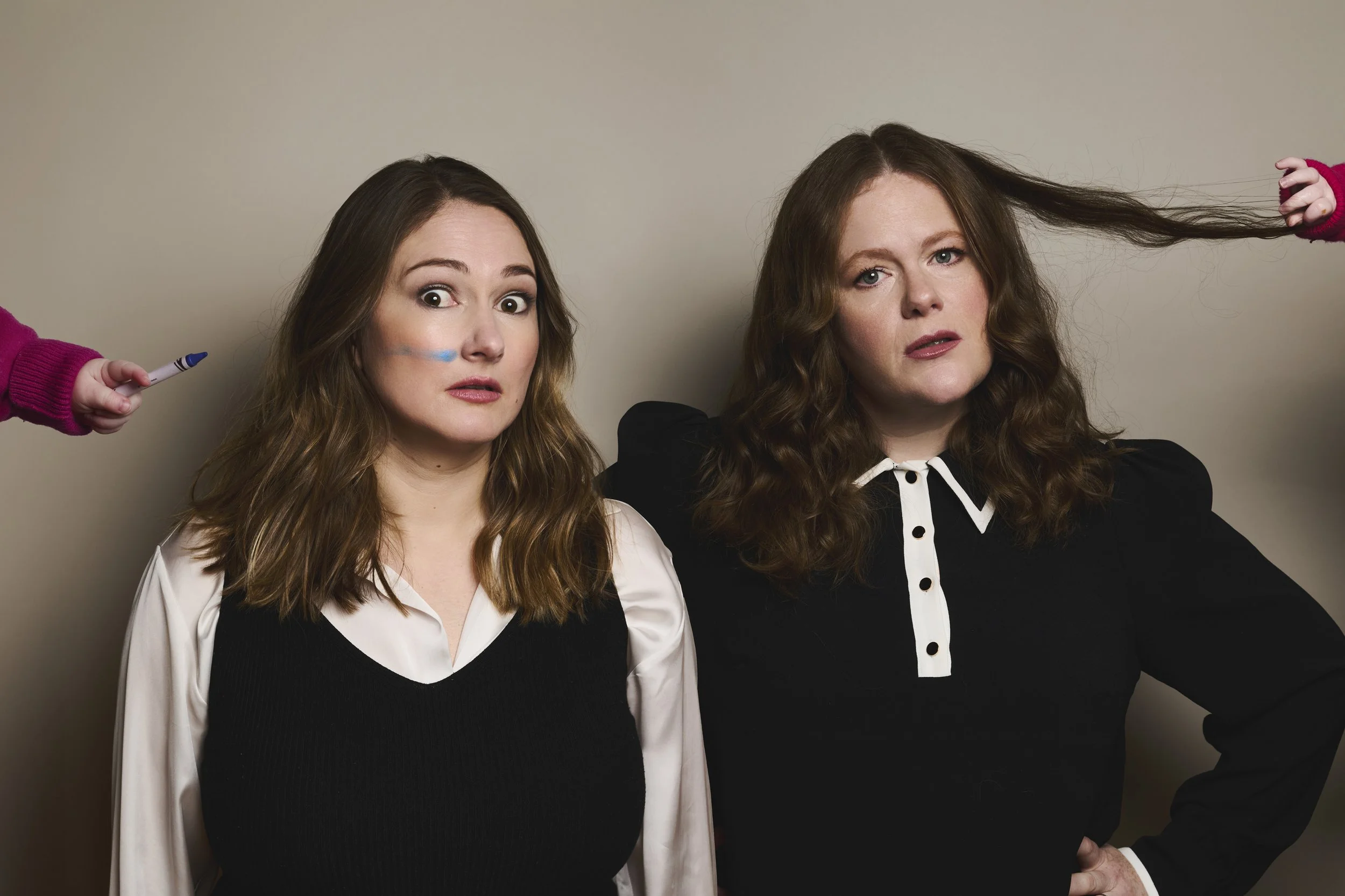
Lizze Stables (left) stars in Nanny with Alana Ramsey and directed by Sara Pascoe
Many will recognise Lizzie Stables from her acting career, but these days her focus sits as much behind the scenes as on stage. As Artistic Director of Folio Theatre, now celebrating its tenth anniversary, and with her forthcoming BBC Radio 4 comedy-drama Nanny earning rave reviews, this feels like a significant moment in her career.
Co-written with Alana Ramsey and directed by Sara Pascoe, Nanny explores childcare, friendship, ambition and the strange emotional territory between wanting a career, wanting children, and trying to hold onto yourself somewhere in the middle. We spoke to Lizzie about creative reinvention, the realities of motherhood in the arts, and why success looks very different now.
Many people will know you from your acting career, but this feels like a real new chapter. Does this moment feel different?
It really does. I’ve spent the last ten years working across acting, producing and developing new plays simultaneously, never really knowing how to define myself.
Nanny is the first play I’ve written and it brings together so many different passions and parts of my life, comedy, writing, audio work, producing. I’m so proud of it and I feel like I can finally stop apologising for being interested in lots of different things.
I started as an actor first and that’s still very much part of who I am, but having ownership over my work and the projects I do feels like a huge privilege.
Nanny feels both funny and painfully relatable. Where did the idea first come from?
Alana and I, like many actors, worked for years as nannies to support our acting careers. We both actually really loved it, that was something we wanted to make sure came across in the play, but parts of it were so hard.
We felt that was something that isn’t often explored, how it feels to be craving success in your own career and family one day, while working for brilliant women who seem to already have everything you aspire to - and of course there are also so many hilarious moments that come from working with kids.
We actually started writing Nanny before we became mums ourselves. Through the time we’ve been working on it, we’ve both had children, and that shift in perspective, being able to see it from both sides, has made the story much richer.
The play explores childcare, friendship and ambition with real honesty. Why did those themes feel important to tell now?
I think ambition in relation to motherhood and parenting is so interesting and underexplored. As soon as I became a parent, all my care and ambition shifted away from myself and towards my children, or at least that’s how it felt for me. I felt guilty for working, especially in a career that can at times feel quite self-serving.
I had to keep reminding myself that I am someone’s child too, and that neglecting all the hard work and support my parents gave me in following my dreams didn’t make sense either.
For me, the tension between childhood dreams and reality, set against the backdrop of childcare, is what makes Nanny most interesting. As well as the way friendships sustain us and also change immeasurably as we grow up, particularly once children arrive.
We deal with a lot as women, and it’s really bloody hard to support each other while also trying to hold onto who we are and who we still want to be and we wanted to be honest about that.
Has becoming a mother changed the way you think about ambition and creative work?
Yes, definitely. At first it almost made everything easier in a strange way because suddenly nothing felt important in the way it used to. I didn’t care as much.
Now, as my toddlers are turning into little people, I care enormously that I make them proud and show them what it means to love your work. Finding balance is very difficult. Because I’m self-employed, I often feel like the more and harder I work, the more I’ll achieve, and it can be difficult to know when to stop.
There’s no real boundary between work and home, and because of that working often does feel like a sacrifice. I’m still working that out and I’m not sure anyone finds it easy.
It’s also given me a much lower tolerance for bad practice. I often feel angry about what’s expected of actors in particular, but without being able to do much about it apart from trying to ensure that through Folio I never treat artists that way.
Folio Theatre is celebrating ten years this year, which is no small thing in the arts. Looking back, what are you proudest of building?
I’m incredibly proud that Folio has survived and grown while staying true to what we set out to do, which is make ambitious, emotionally intelligent new work with brilliant artists.
We’ve always wanted the quality of the work to feel completely uncompromising, while also being rooted in Wiltshire and connected to communities outside major cities. It was never about making “regional” work as an alternative to what happens in London, it was about proving that world-class new writing can be made anywhere.
I’m really proud of the culture of the company too. We’ve always tried to be artist-led and collaborative, and to champion female artists and stories in particular. Some of the relationships we’ve built with writers, actors and communities over the last decade are the thing I value most. And honestly, I’m just very proud of the work itself.
Moving into radio with Nanny also feels incredibly exciting. Audio drama is something I’ve loved for years and worked in a lot as an actor, so for Folio to begin producing work in that space feels like a really meaningful next step.
Folio’s work goes beyond productions. Was creating that kind of impact always part of the vision?
Absolutely. A huge part of why I started Folio came from moving to London after growing up in a tiny farming village in rural Wiltshire and seeing how stark the difference was in access to theatre and culture.
I realised that if my parents, who were both English teachers, hadn’t been interested in taking us to plays, how would I even have known this was something I could love, let alone do as a career?
Later, when I started nannying in London, seeing the difference between what was accessible to the children I worked with and what was available to young people growing up where I had, I wanted to do something about it. That’s still a huge driving force behind our work.
This year we launched a creative mentoring programme for young carers interested in creative careers, and we’re now expanding that work to support other young people who face barriers to higher education and creative industries.
Creative industries can still be tough places for mothers, practically and psychologically. How have you navigated that personally, and what do you think the arts still get wrong when it comes to supporting women through mid-career?
I honestly still feel very much in the “learning on the job” phase of this.
If anything, becoming a mother made me more emotionally invested in work, not less, because the sacrifice involved in doing it suddenly felt so much bigger. There’s a pressure to make every opportunity count because your time feels so precious.
I think there’s also a real panic a lot of women experience around taking time out and feeling as though the industry will move on without you. I definitely felt that. At times I felt torn between wanting to be fully present with my children and also needing work creatively and psychologically in order to feel like myself.
What I’m trying to get better at now is recognising that sustainability matters. I don’t want to build a creative life that constantly comes at the expense of everything else. I’m still figuring that out, honestly.
I think the arts genuinely strives to support parents, but in reality the nature of the work often makes it incredibly difficult.
As a mother, when you have a baby you either take time out of your career, potentially turning down life-changing opportunities, or you try to make every job and audition work despite, which is enormously stressful and difficult. Inevitably there is sacrifice either way.
Companies vary hugely in how flexible they are around parenting commitments. Some are brilliant, some, including very respected institutions, are not. But I also think arts organisations themselves are operating under enormous pressure, so what they want to offer artists isn’t always financially or practically possible.
What I am starting to realise is that this challenge doesn’t end after the baby stage. For many women it continues throughout motherhood, just in different forms.
Between writing, acting, artistic leadership and motherhood, what does success actually look like to you now?
Success looks much less external to me than it used to. Of course I still care deeply about making ambitious, well-respected work, but now I think I measure success equally by whether I’m building a creative life that feels sustainable and meaningful.
Being able to work on projects I genuinely care about, collaborate with people I love, and still be present for my family feels incredibly important to me now.
I want to continue building Folio, writing more with Alana, developing comedy and audio projects I’ve been quietly working on for years, and carrying on acting, hopefully without completely burning myself out in the process.
I want to keep making work for a long time, while also being a good mum and not losing the joy in any of it. Oh, and maybe winning the odd award at some point wouldn’t hurt either. Childhood dreams die hard.
Nanny airs on BBC Radio 4 on Thursday 21st May - Listen here