
Why We Need to Stop Saying ‘I’m Bad at Maths’
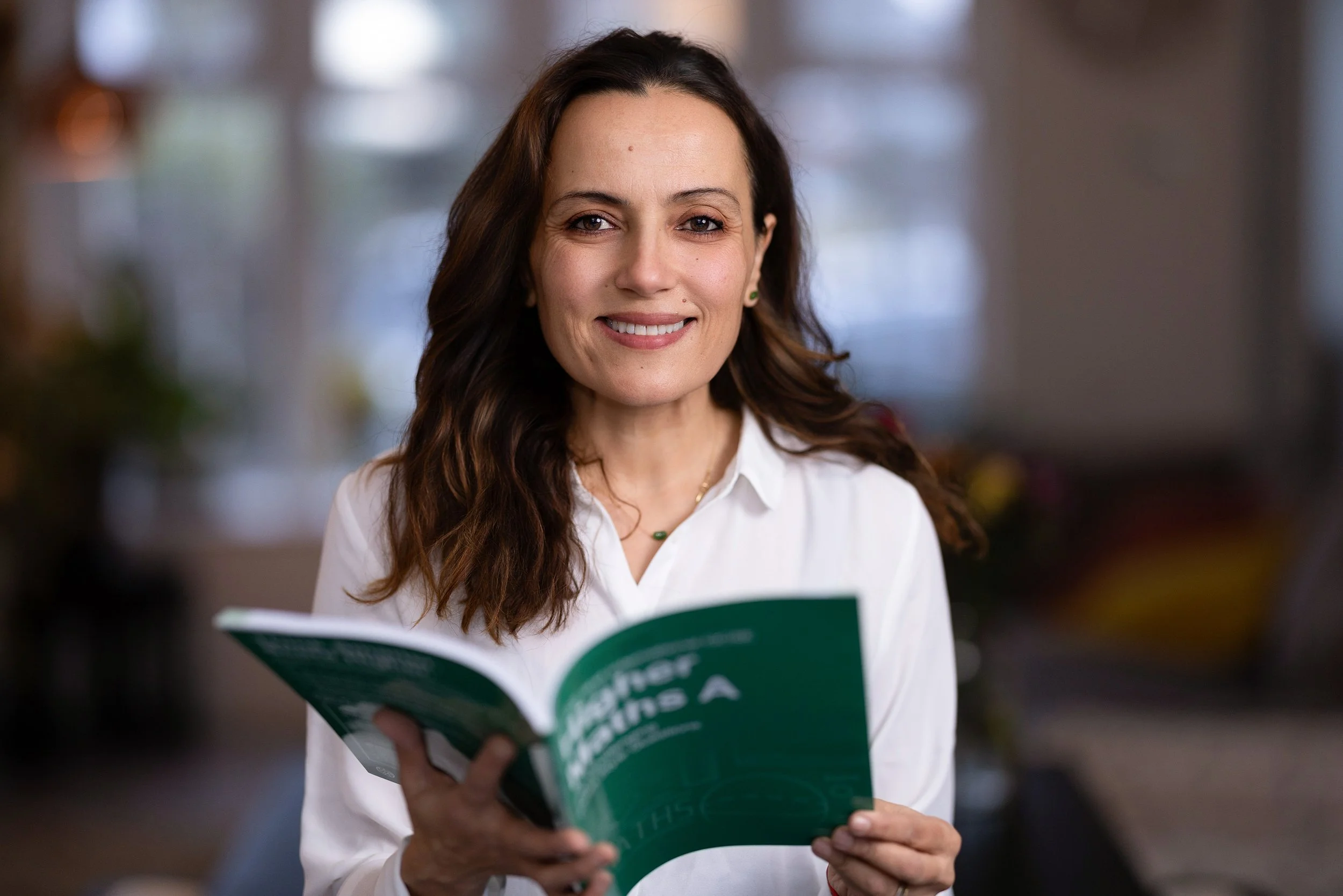
Maths educator and mother Belle Cottingham on why helping children feel confident with numbers doesn’t mean more homework – it starts with noticing the maths already happening around them.
I remember trips into London when my children were young. A day out sounded simple enough. In reality, like most things with young children, it required military-level planning: a budget to stick to, train times to navigate, food to buy and, crucially, nap times to work around.
Before we'd even arrived, the questions would begin.
"How long until the train comes? How many stops are there? When will we be there?"
Then, once we were in London:
"How much does that cost? What if we buy two? How much cheaper is this one? Do we have enough money left?"
At the time, I don't remember thinking, What a wonderful maths lesson.
I was a mum trying to get through a day in London with young children, preferably without missing the train or a nap. But looking back, I realise how much maths was happening all around us. Time, money, addition, subtraction, estimation, comparison, distance and problem solving were woven through the day, and nobody had opened a maths book.
That stayed with me. I've spent much of my life teaching maths, and one of the questions children ask me most often is: "When am I ever going to use this?"
The answer is simple: you already are.
We talk a lot about nourishing young children. We nourish their bodies with good food. We read to them to develop language. We encourage creativity, answer questions, take them outside and give them opportunities to explore the world around them.
I think we can nourish their mathematical thinking in much the same way.
And I don't mean more homework.
I mean helping them notice the maths that is already part of everyday life. A trip to the supermarket is maths. Cooking dinner is maths. Sharing a pizza is maths. Working out whether there's enough pocket money for a toy is maths. Planning when you need to leave the house is maths. Even the familiar cry of "Are we nearly there yet?" is an opportunity to think about time and distance.
Children are already living in a mathematical world. We don't necessarily need to create more maths for them; we simply need to help them see it.
That doesn't mean turning every moment into a lesson. Nobody wants to be the parent who responds to every request for an ice cream with a five-part arithmetic problem. Children need time to play, and a family day out should still feel like a family day out.
But there are opportunities for curiosity everywhere. How many do you think we'll need? Which one is better value? How long do you think it will take? If we split this between four people, how much will we each get? How could we work that out?
Sometimes children will answer confidently. Sometimes they'll guess. Sometimes they'll shrug and say, "I don't know."
That's fine.
The important thing isn't always getting the answer right. It's becoming comfortable with wondering.
Over the years, this is something I've become increasingly conscious of as a teacher and tutor. Children can become very focused on arriving at the correct answer. They want to know whether they're right or wrong. But problem solving asks something different. It asks: What do I know? What could I try? Does my answer make sense? Is there another way?
Those are valuable questions far beyond a maths classroom, and they are skills we can encourage from a surprisingly young age.
When my children were around seven, I started looking for maths books built around this kind of thinking. I wanted worded problems that felt connected to children's real lives rather than questions that simply told them which calculation to perform.
I couldn't find quite what I was looking for, so I started writing them myself.
Trips to London. Playing in the park with our dog Bailey. Sharing food. Baking. Journeys and distances. The ordinary things we did as a family became mathematical problems.
Years later, those early questions became the starting point for the Olivia Press Primary Maths Problem Solving Series. But the idea behind them hasn't changed: maths makes more sense when it means something.
There is something else parents can do that costs nothing at all, and that's paying attention to the language we use around maths.
I often hear adults say, "I'm terrible at maths" or "I was never a maths person." Sometimes we even say to children, "You take after me. I couldn't do maths either."
It's usually said lightly, but children listen.
Imagine saying, "We're just not reading people in this family." It sounds absurd. Yet we've somehow accepted the idea that maths is an innate talent; that you either have a maths brain or you don't.
I'd love us to replace "I'm terrible at maths" with something much simpler: "I'm not sure. Let's work it out."
There is something powerful about a child seeing a parent not know the answer and then working through a problem anyway.
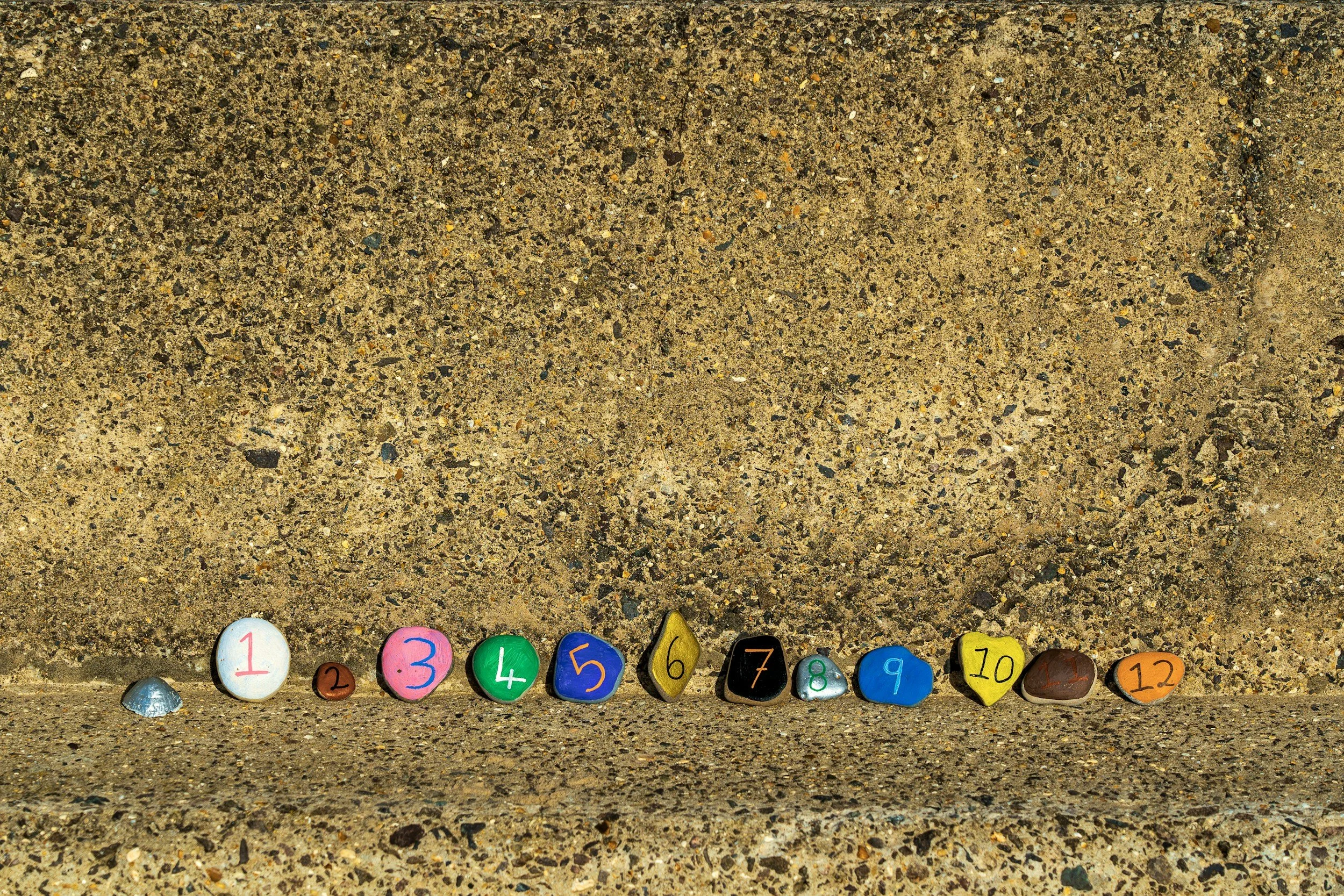
We can go one step further and let children ask the questions. Instead of always posing maths problems to them, ask them to create one for you. On a train, ask them to invent a question about the journey. While cooking, ask them to create a problem using the ingredients. While shopping, challenge them to come up with the most difficult question they can about what's in the trolley.
Children love turning the tables on adults. Creating a problem requires a different type of thinking from simply solving one, and it sends an important message: maths belongs to them too.
Perhaps this is the most important thing I've learned, both as a maths educator and as a mother. Supporting your child's maths doesn't mean turning your kitchen table into another classroom. You don't need to know the curriculum. You don't need to remember how to do long division. And you certainly don't need to fill every spare moment with worksheets.
Instead, notice things together. Wonder. Estimate. Compare. Ask, "How do you know?" Let children get things wrong. Let them change their minds. Let them find their own way.
Because the foundations of maths aren't only times tables and number facts. They're also curiosity, confidence and the willingness to have a go.
I think back now to those trips into London. I thought I was organising train times, budgets and naps. My children thought they were having a day out. Neither of us thought we were doing maths.
Perhaps that's exactly the point.
Maths was simply part of our life.
And maybe one of the best things we can do for our children is help them grow up knowing that it always will be.
Belle Cottingham is a maths educator, author and founder of Olivia Press Education. The Olivia Press Primary Maths Problem Solving Series grew from the real-life maths she noticed while raising her own children, with the aim of helping children see maths as something to explore, question and enjoy and not simply something to get right.